

Precision work in the tightest of spaces: Spesa executes pile foundation for Märkisches Museum in Berlin
- Extensive rehabilitation of Märkisches Museum in Berlin since 2024
- Pile foundation on basement level to stabilize the structure
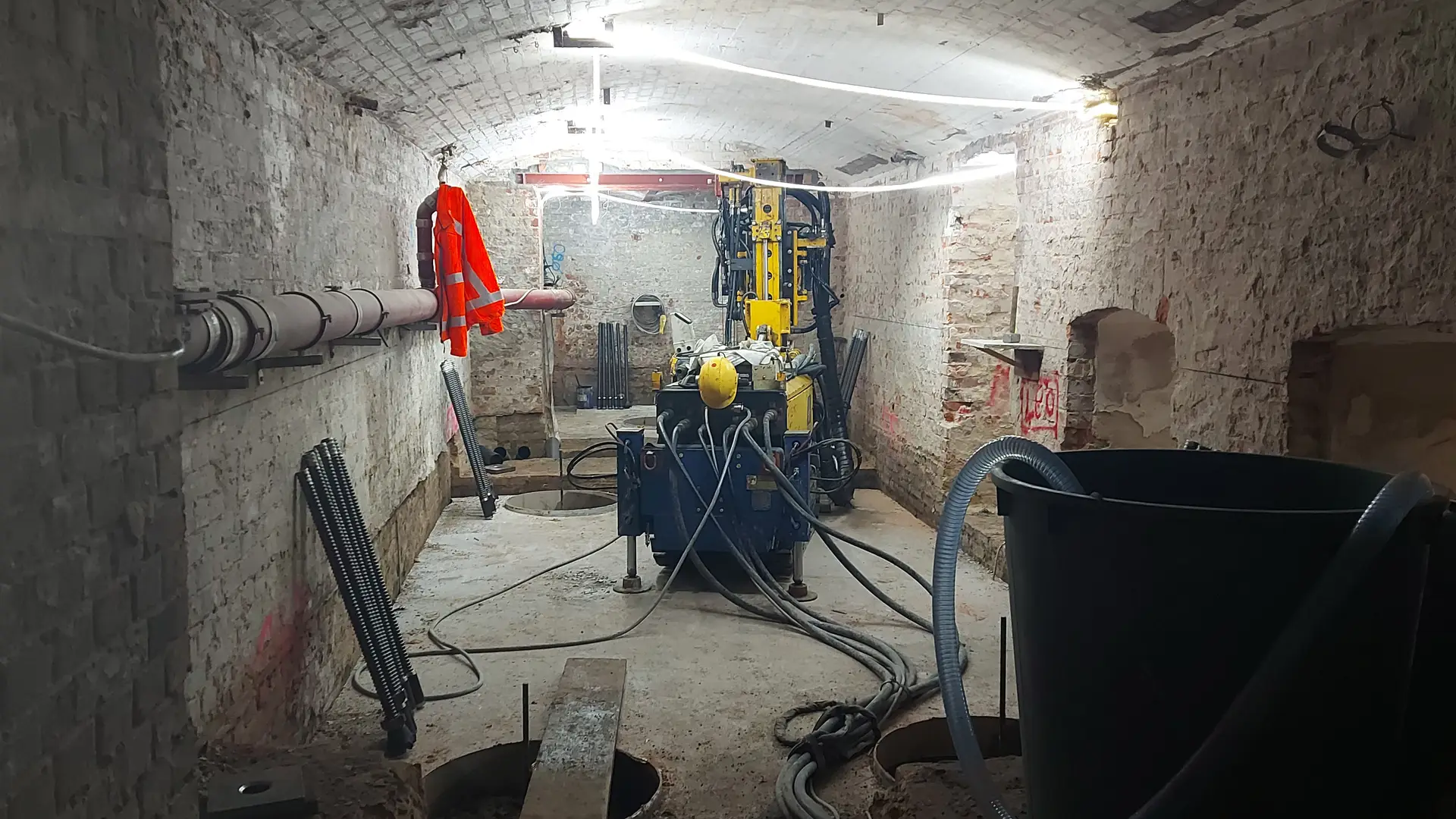
- Confined working conditions in basement
Berlin, Germany – Masonry made of red bricks, Gothic gables and a striking tower that is still visible: The Märkisches Museum set architectural standards even back when it first opened in 1908. Designed as a highly modern museum, this historic structure aimed to depict the regional construction styles of different eras in a unique way. At the same time, it was one of the first buildings worldwide that was constructed expressly as a city museum – an extraordinary structure with a long and eventful history.
Extensive rehabilitation
Since 2024, the Märkisches Museum in Berlin’s Mitte district has been undergoing extensive rehabilitation and modernization. Apart from renovating the building’s technical equipment, improving accessibility and adjusting the exhibition spaces, the works particularly center around fire protection and refurbishment of the historical basic structure. One particular focal point was the building’s foundation, which was negatively impacted by lowering groundwater levels in the 1940s and 1960s. For this reason, a recent soil report recommended rehabilitation and sealing of the existing foundation.
A stable foundation
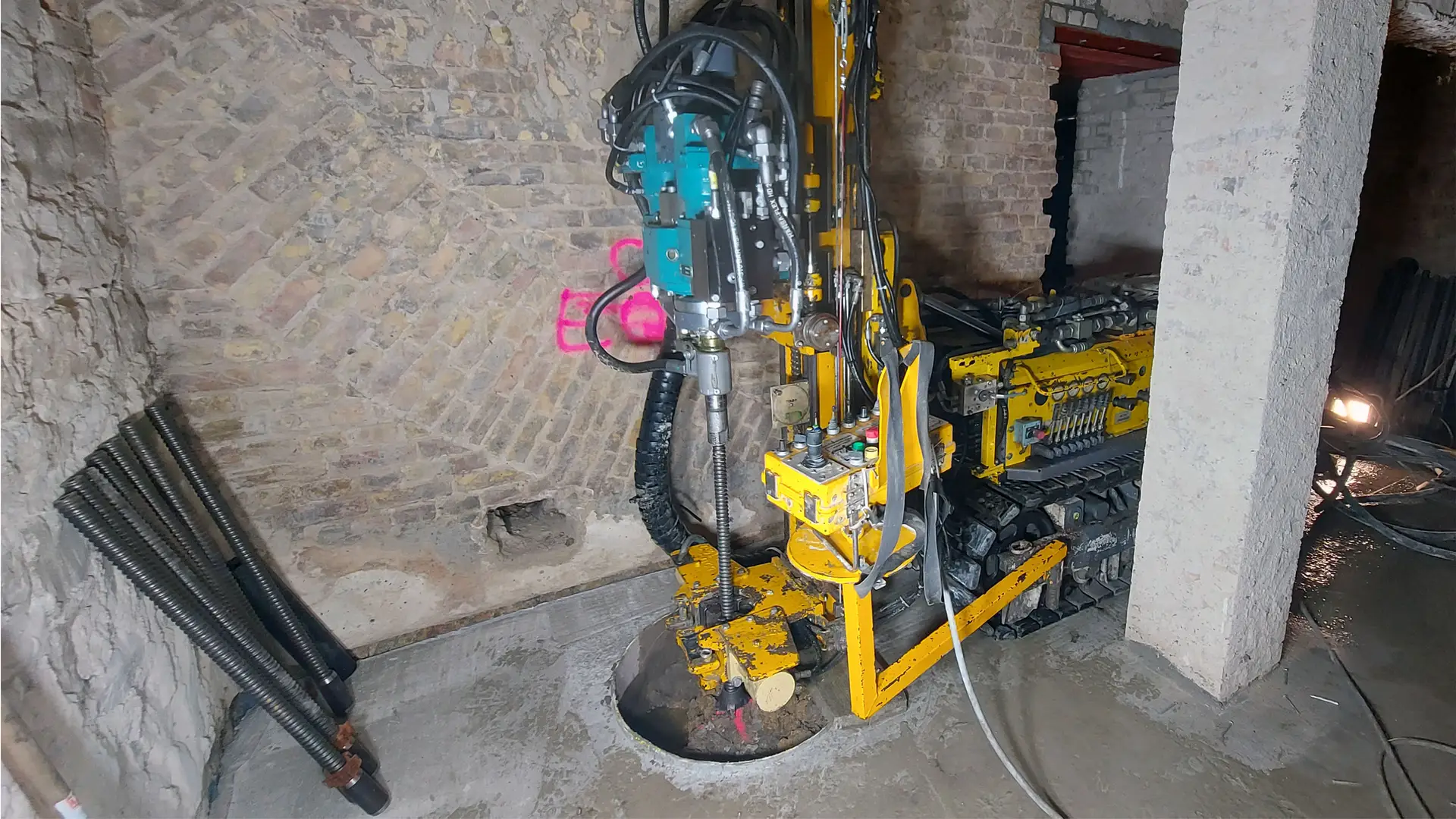
BIM Berliner Immobilienmanagement GmbH commissioned SPESA Spezialbau und Sanierung GmbH to execute the pile foundation on the basement level. “A total of 195 piles were installed with a length of up to 10 m,” explains Silvio Stadach, Project Manager at Spesa. The work was carried out using self-drilling anchors of the type Ischebeck TITAN with diameters 40/16, 52/26 and 73/53. What makes this system unique: The anchors act simultaneously as the drill string, injection line and anchoring. This eliminates the need for separate casing of the borehole, saving time and costs.
Work in the tightest of spaces
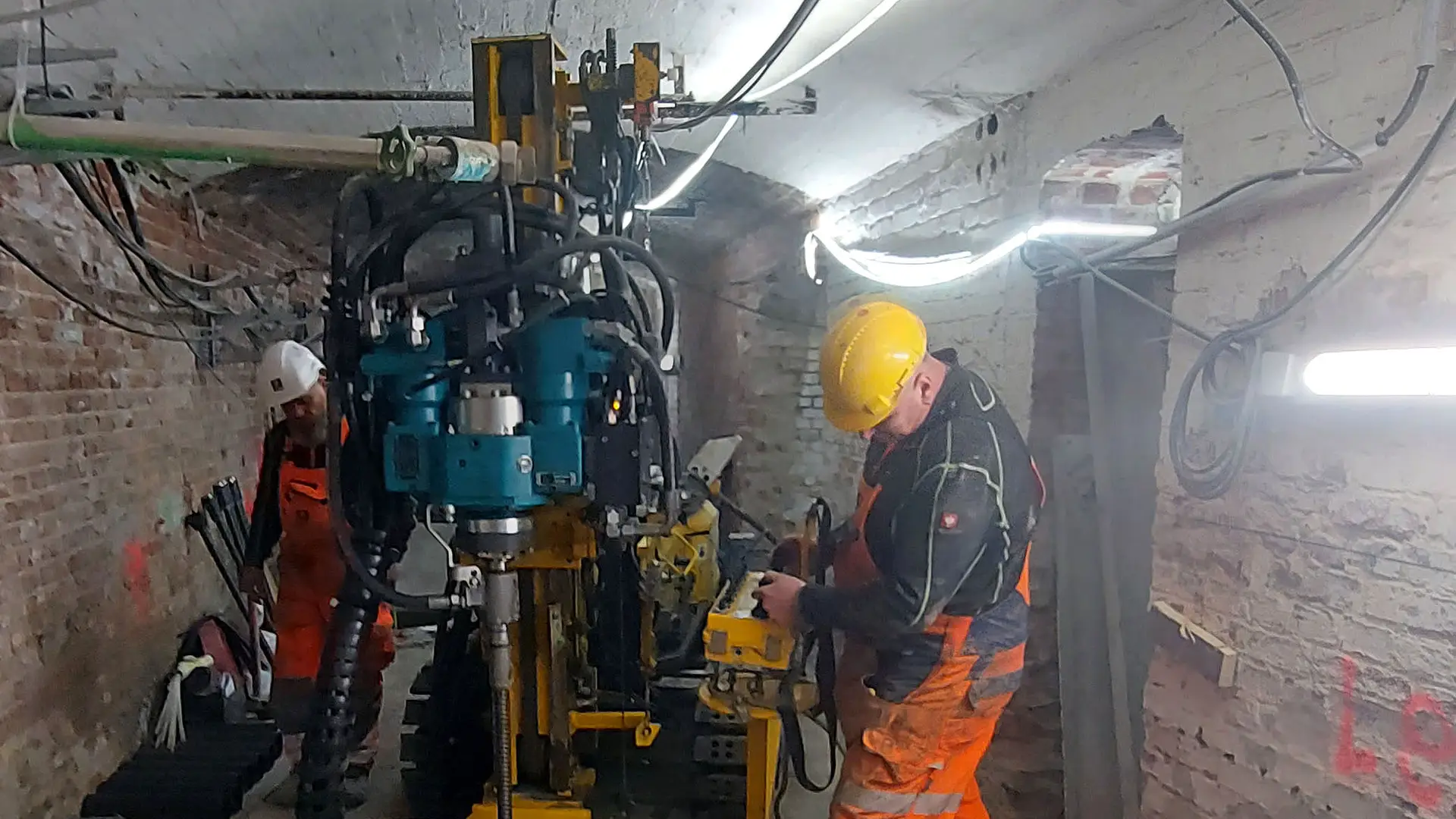
“The biggest challenge was the confined working situation in the basement with a maximum room height of just 2.6 m,” continues Silvio Stadach. “In some places, installation had to be executed with manual feeds because not all rooms were accessible for the drilling rig.” The work was executed using a KLEMM KR 701 anchor drilling rig with feed, drill drive, hammer mechanism and electric power pack. “We were assisted by our colleagues from BAUER Spezialtiefbau GmbH, who provided us with the equipment. It was an ideal choice for the low room heights.” The main work started in March 2025 and was completed in early June. Remaining tasks were performed in October 2025.
Press Images
Download
Your Contact